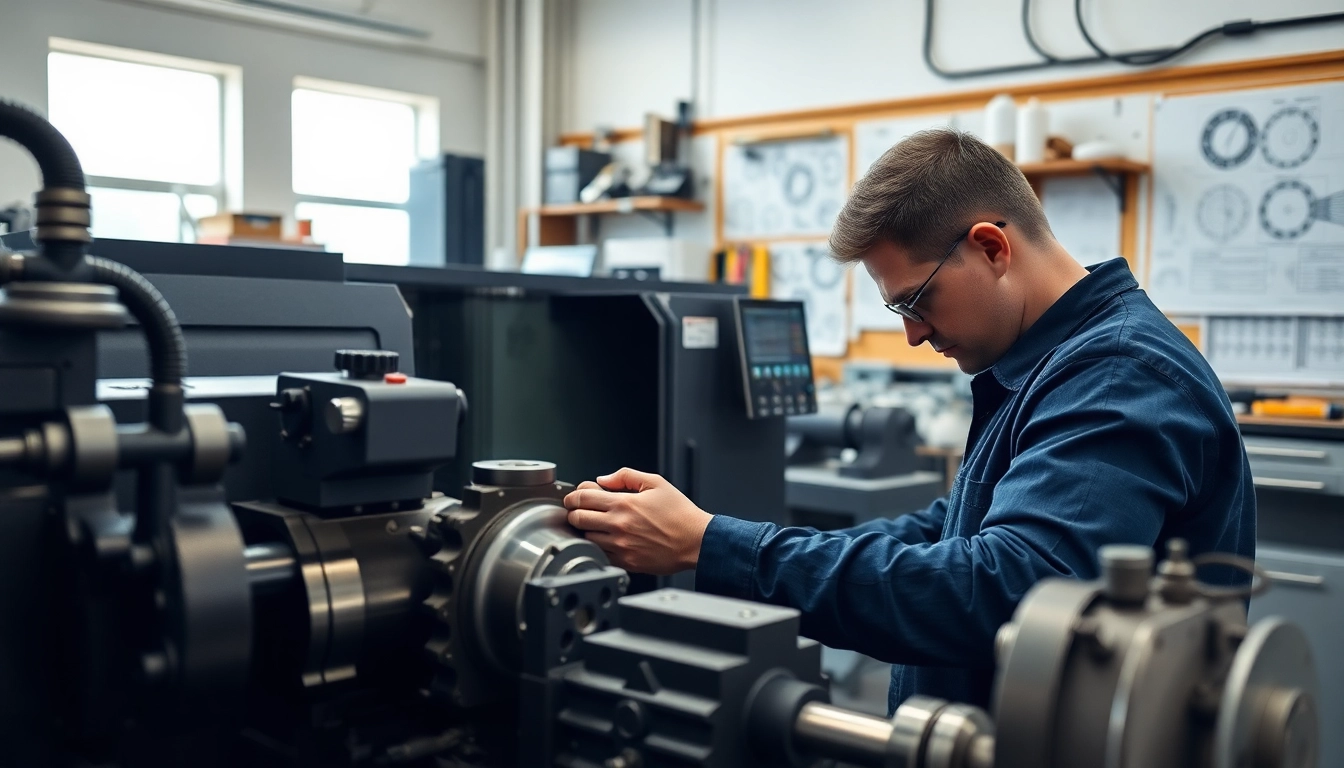
Understanding the Role of a Custom Part Manufacturer
Defining Custom Part Manufacturing
The concept of custom part manufacturing revolves around the creation of parts and components that are specifically designed to meet unique requirements and specifications. Unlike standard part production, which typically focuses on high-volume runs of identical items, custom manufacturing addresses the needs of individual clients or specific applications. This nuanced approach allows businesses to obtain tailored solutions that fulfill their operational demands seamlessly.
In the field of manufacturing, a custom part manufacturer plays a critical role. These manufacturers employ advanced technologies such as CNC machining, 3D printing, and other fabrication techniques to produce specific parts from various materials including metals, plastics, and composites. As a result, businesses can enhance their products’ performance, longevity, and overall quality.
Key Benefits of Custom Manufacturing
The advantages of custom manufacturing are extensive, providing businesses with numerous strategic benefits.
- Precision and Accuracy: Custom part manufacturers leverage sophisticated machinery and skilled labor to produce components that meet exact specifications. This mitigates issues related to tolerances and fit, which can often compromise product integrity.
- Flexibility and Adaptability: Companies can modify designs rapidly in response to market demands, evolving technologies, and customer feedback. This flexibility is essential in industries characterized by shifting trends.
- Enhanced Quality: With dedicated quality control processes, custom manufacturers ensure that parts meet rigorous standards, thereby improving the end product’s reliability.
- Reduced Time to Market: Rapid prototyping capabilities allow businesses to test and iterate designs quickly, expediting product development cycles.
Typical Applications of Custom Parts
Custom parts find applications across various sectors, demonstrating their versatility:
- Aerospace: Tailored components for aircraft and spacecraft that meet strict regulatory standards.
- Automotive: Custom parts for vehicles that enhance performance or address specific requirements.
- Medical: Unique components used in medical devices crucial for patient care can be meticulously engineered to comply with health regulations.
- Electronics: Precise parts that are essential for fulfilling cutting-edge electronic applications.
Choosing the Right Custom Part Manufacturer
Factors to Consider When Selecting a Manufacturer
Selecting a suitable custom part manufacturer requires careful consideration of several factors:
- Experience: The manufacturer’s experience in the relevant industry may provide insights into their capabilities and expertise.
- Reputation: Researching feedback and reviews can help assess the reliability and quality of the manufacturer’s services.
- Customer Support: A responsive customer service team can ease communication and facilitate smoother project management.
Assessing Capabilities and Equipment
It is vital to evaluate a manufacturer’s technological capabilities and machinery:
- Production Volume: Understanding a manufacturer’s capacity for both small and large production runs helps in aligning with your project needs.
- Technology: Manufacturers should utilize cutting-edge technology to ensure high precision and efficiency.
- Material Handling: Assess the range of materials they can work with, as this is often crucial for successful product performance.
Importance of Certifications and Compliance
Compliance with industry standards and certifications is essential for ensuring product quality and market acceptance. Manufacturers should have:
- ISO Certifications: Relevant ISO standards indicate a commitment to quality management systems.
- Industry-Specific Certifications: Certain industries (like aerospace and medical) require additional compliance to maintain safety and efficacy.
Cost Implications of Custom Part Manufacturing
Understanding Pricing Models
The pricing for custom manufacturing can vary significantly based on the complexity of the design, materials used, and production techniques employed:
- Flat-rate Pricing: Fixed pricing for specific tasks or parts.
- Variable Pricing: Costs that fluctuate based on changes in material costs or labor rates.
Budgeting for Custom Parts
Effective budgeting for custom part manufacturing is crucial. Key considerations include:
- Initial Costs: Factor in design, prototyping, and production costs.
- Long-term Expenses: Consider maintenance and potential future ordering costs.
- Unexpected Costs: Always allocate a buffer for unforeseen changes or issues that may arise during production.
How to Minimize Costs without Sacrificing Quality
Minimizing costs while maintaining quality can be achieved through the following measures:
- Optimized Design: Simplifying designs can lead to savings in materials and manufacturing time.
- Bulk Ordering: Ordering larger quantities may reduce per-unit costs significantly.
- Vendor Relationships: Building strong relationships with manufacturers can lead to better terms and pricing.
Trends Shaping the Future of Custom Part Manufacturing
Impact of Technology and Automation
Automation and advanced technologies are revolutionizing custom manufacturing. Developments in robotics, AI, and machine learning facilitate:
- Improved Efficiency: Reduced labor costs and enhanced production speed.
- Data-Driven Decisions: Integrating data analytics for informed decision-making enhances productivity and quality control.
Sustainability Practices in Manufacturing
Environmental sustainability is increasingly vital in manufacturing. Key practices include:
- Material Sourcing: Using recycled or eco-friendly materials minimizes environmental impact.
- Waste Reduction: Implementing lean manufacturing techniques to reduce scrap and enhance efficiency.
Emerging Materials and Processes
Innovative materials like composites and advanced polymers are being explored in custom manufacturing, providing benefits such as:
- Enhanced Performance: New materials often exhibit improved strength-to-weight ratios and durability.
- Cost Reductions: Newer processes can lead to less waste and energy consumption.
Frequently Asked Questions (FAQs)
1. What is a custom part manufacturer?
A custom part manufacturer is a company that specializes in creating unique parts tailored to specific design requirements, using various fabrication technologies.
2. How long does it take to receive custom parts?
The lead time for custom parts varies based on complexity and quantity, but typically ranges from a few days to several weeks for production and delivery.
3. Can I provide my designs for custom manufacturing?
Yes, you can submit your own CAD designs; many manufacturers accept digital files to create parts according to your specifications.
4. What industries benefit from custom part manufacturing?
Industries such as aerospace, automotive, medical, electronics, and robotics often require custom parts for enhanced functionality and compliance.
5. Are custom parts more expensive than standard parts?
Custom parts can be more expensive due to unique specifications and lower production volumes, but they provide distinct advantages in terms of performance and fit.